

The Severing of the Celestial Mandate: Ancient vs. Modern Astrological Practice
The answer to the question: "What is the difference between modern / mainstream Astrology, and Astrology as the ancients (and elite today) practice it?"

The schism between ancient/historical astrology—as practiced by the Chaldean hierophants, Egyptian initiates, and Renaissance magi like Nostradamus—and its modern iteration is the divergence between a cosmological roadmap of divine reality and a localized, often self-obsessed, psychological artifice. The core difference lies in the fundamental purpose, the cosmological model, and the occult complexity inherent in the older practice, which modern practitioners have largely shed, either by necessity or through the corrosive influence of exoteric rationalism.
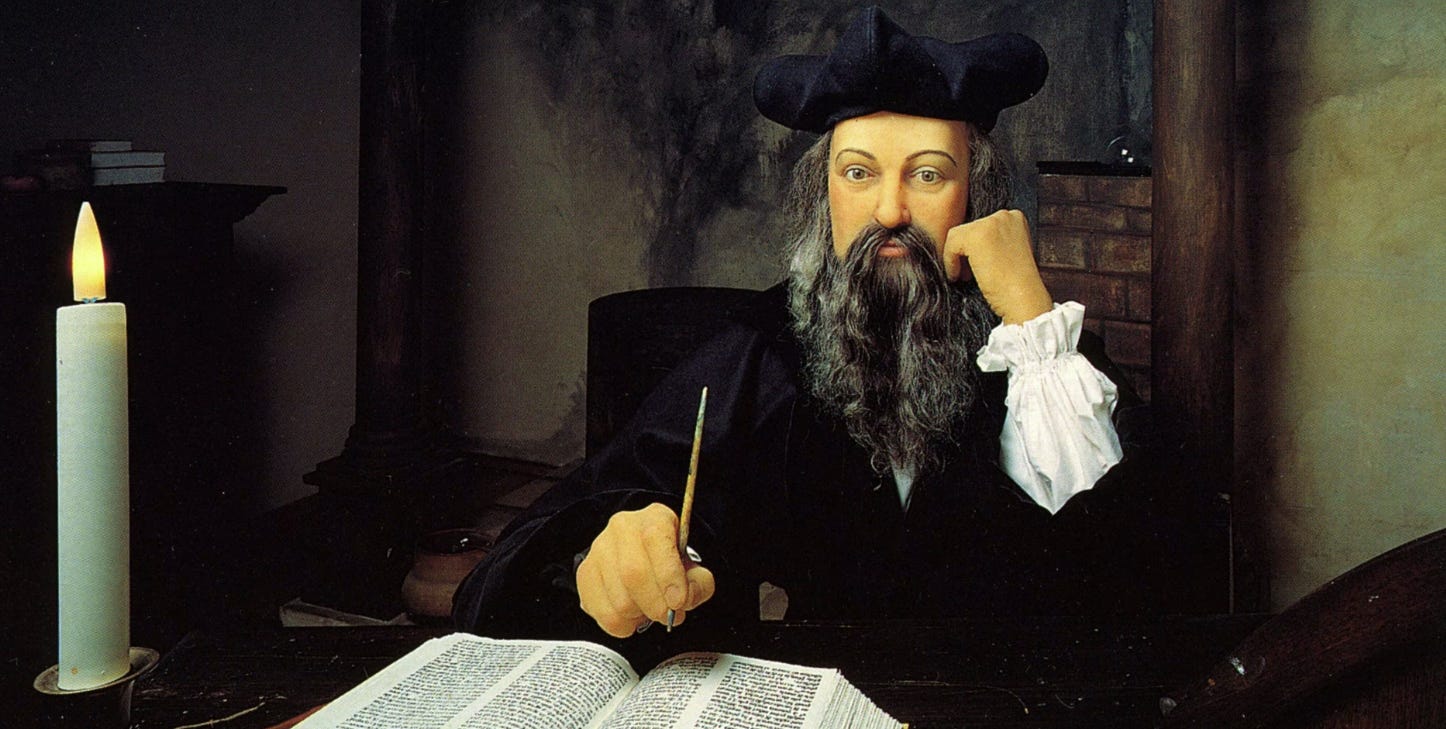
DEEP DIVE I: THE COSMOLOGICAL AXIS: FROM DIVINE REALITY TO ARTIFICIAL SYSTEM
The most profound cleavage between the historical and the current practices rests in their relationship to external reality and the structure of the cosmos itself.
The Geocentric Foundation as Spiritual Truth
In the ancient world, astronomy and astrology were inextricably fused; the division between the disciplines was not recognized in practical usage prior to the 17th century. The ancient philosophy explained how humanity’s experience of the universe came to be, focusing on human consciousness as the great miracle, while modern science seeks to explain the physical universe.
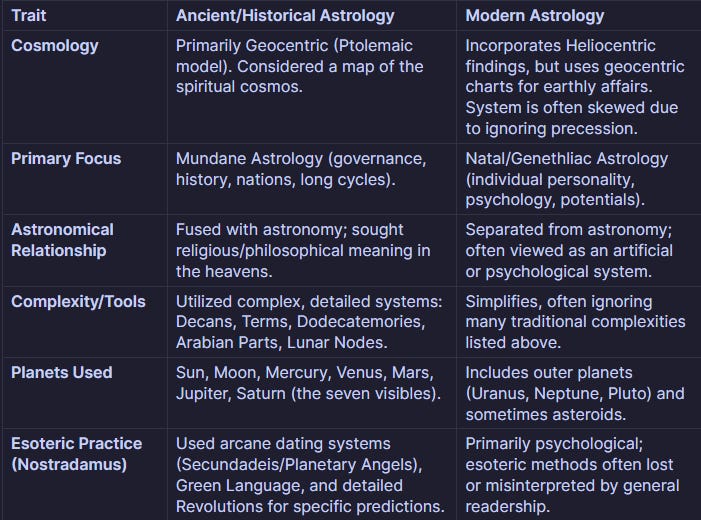
Historical astrology, including the Ptolemaic system which served as its foundation for millennia, was predominantly geocentric (Earth-centered). While astronomically this model is incorrect, historically it was considered an accurate map of the spiritual dimension of the cosmos, a dimension which the ancients considered more real than the material one. This model was used successfully for thousands of years when applied to the material nature of earthly things.
The geocentric view, as promoted by Ptolemy, tied the solar system to the mythology of the ancients, providing a system that can be described as psychological astronomy. Furthermore, in the Ptolemaic model inherited by the late-medieval world, the Earth itself was placed at the center, surrounded by the spheres of the seven ancient planets, beyond which was the eighth sphere of fixed stars (the zodiac) and then the divine hierarchies. The entire system was structured to reflect the law of analogy, believing the universe was a great organism corresponding to the human body.
The Modern Collapse into Artifice
In contrast, modern astrology suffers from a foundational falsehood imposed by cosmic mechanics—the effect of precession. The sources indicate that the zodiacal system used today is “skewed almost one full month out of place” due to the precession occurring over the past three thousand years. This critical misalignment means that a person’s modern sun sign assignment does not align with the actual position of the stars but falls under the preceding sign.
The result is that modern horoscopes are explicitly not based on the actual aspects of the heavens at all, but rather upon an “artificial system” which is only internally self-consistent, lacking regard for external reality. This is the necessary consequence of ignoring the slow, backwards shift of the equinoctial point through the zodiac, a wobble known since ancient times. The true Great Year cycle of precession lasts approximately 25,920 years.
DEEP DIVE II: THE MANDATE OF SCOPE: FROM MUNDANE TYRANNY TO NATAL SOLIPSISM
The purpose of astrology for ancient practitioners, particularly those connected to statecraft and arcane schools, transcended individual self-help, focusing instead on the macrocosmic destiny of nations and history.
Historical Focus: Government and Cosmic Cycles
Ancient astrology, known primarily as Mundane Astrology, was concerned with predicting the fate of nations, political upheavals, regnal periods, and religious events. It is arguably the oldest branch of the art, documented in Babylonian records dating back to the second millennium B.C.E..
For philosophers like Pythagoras and Plato, astrology was viewed as a science of government. They observed the motions of celestial bodies and the cosmic order as a pattern of natural laws, believing the State should be patterned after the Cosmos. Priest-astronomers sought the will of God in these celestial motions, seeing the planetary arrangements as “letters of a celestial alphabet” spelling out warnings.
Nostradamus epitomized this focus, basing his epochal predictions on large-scale cycles, primarily the Revolutions of the superior planets—Jupiter and Saturn—whose conjunctions (approximately every 20 years, shifting elemental signs every 240 years) were deemed indicators of vast historical change. His prophecies dealt with the history of Europe extending over roughly 800 years, tied specifically to these planetary movements. Furthermore, historical figures like Kepler and Washington used astrology to time major events, such as coronations, the founding of financial centers, or the laying of cornerstones, through electional astrology.
Modern Focus: The Cult of the Ego
The modern era, particularly following the occult revival of the late nineteenth century, saw a decisive shift away from this external, societal focus toward the internal, individual self.
Natal astrology (or genethliac astrology)—the divination of individual character and destiny from a birth chart—is the most famous and widely known form today. Contemporary astrologers primarily concentrate on interpreting the chart in terms of personality and potentials, explicitly avoiding the historical claims of predicting health, career, fortunes, and death that were common in earlier times. This “personal, psychological focus” has diminished the importance of Mundane Astrology.
DEEP DIVE III: TOOLS OF THE INITIATE VS. TOOLS OF THE PROFANE
Historical astrology embraced an immense complexity and number of factors derived from Egyptian, Babylonian, Greek, and Arabic traditions, many of which are now neglected or unknown in popular modern practice.
The Arcane Complexity of Ancient Techniques
Ancient systems utilized a detailed matrix of points and divisions beyond the core twelve signs and seven planets recognized by the naked eye. For the serious practitioner, these included:
Fixed Stars and Constellations: Fixed stars were highly significant, having specific influences attributed to them (e.g., Castor was associated with keen intellect, publishing success, and affliction). Nostradamus’s own chart was dominated by the conjunction of superior planets with Castor and Pollux.
Decans: Divisions of the zodiac into 36 parts (10 degrees each), originally an Egyptian star lore contribution often used in talismanic magic during the Renaissance.
Specific Zodiacal Divisions: Other complexities like astrological Terms and Dodecatemories were crucial elements of ancient astrology.
Arabic Parts (Lots): A set of calculated points (like the Part of Fortune) derived from planetary distances, which were important for prediction in Arabic and medieval astrology but are ignored by most modern astrologers.
Lunar Nodes: The points where the Moon’s orbit intersects the ecliptic, known as Caput Draconis (favorable) and Cauda Draconis (unfavorable), were highly important in medieval and Renaissance astrology, and are still used in Hindu and Arabic practice.
The Esoteric Arcanum of Nostradamus
Nostradamus, specifically, used a unique and highly obscured form of esoteric astrology and dating systems that defied common understanding of his time and ours. His methods required initiation and scholarship:
Arcane Dating and Angelology: Nostradamus utilized the occult system of historical periodicities promulgated by Trithemius, known as the Secundadeis or planetary angels (e.g., Gabriel, the lunar archangel, ruled an age of 354 years). He framed predictions around these archangelic cycles, a tradition derived from ancient Gnosticism, using them as chronological index points rather than strict prediction tools.
Green Language: Nostradamus intentionally obscured his work using the Green Language (a secret language of occultists) combined with astrology, making his verses comprehensible only to the initiated, thus avoiding censure for divination.
Modern Planetary Expansion
Modern astrology, conversely, has been forced to integrate planets unknown to the ancients because they are invisible to the naked eye. Following the Scientific Revolution and the invention of the telescope, systems had to incorporate Uranus, Neptune, and Pluto. Pluto, for instance, was arbitrarily named in 1930 and astrologers then had to retroactively fit it into their system. Certain astrologers also include asteroids like Ceres, Vesta, Pallas, and Juno, assigning them rulerships (often Virgo or Libra). This expansion is a significant structural difference, yet many older, detailed systems (like decans and Arabic Parts) are often ignored in modern practice.
https://open.substack.com/pub/doctorh/p/the-reagan-clock-still-ticks?r=2987u8&utm_medium=ios
while I agree with the tenor of this post, keep in mind that hellenistic astrology had a strong natal tradition, not just mundane. for the application of an ancient technique on the application of terms or bounds for ronald reagan's horoscope, check out my latest post here: